
Description
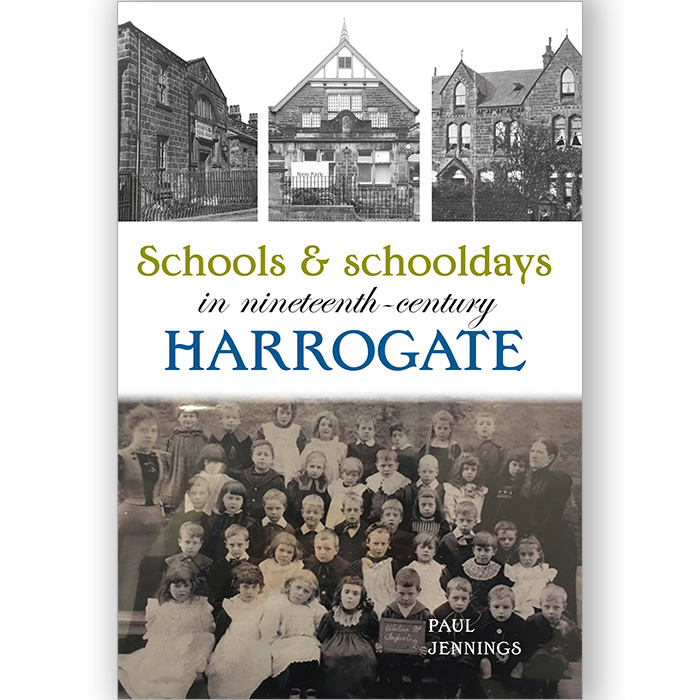
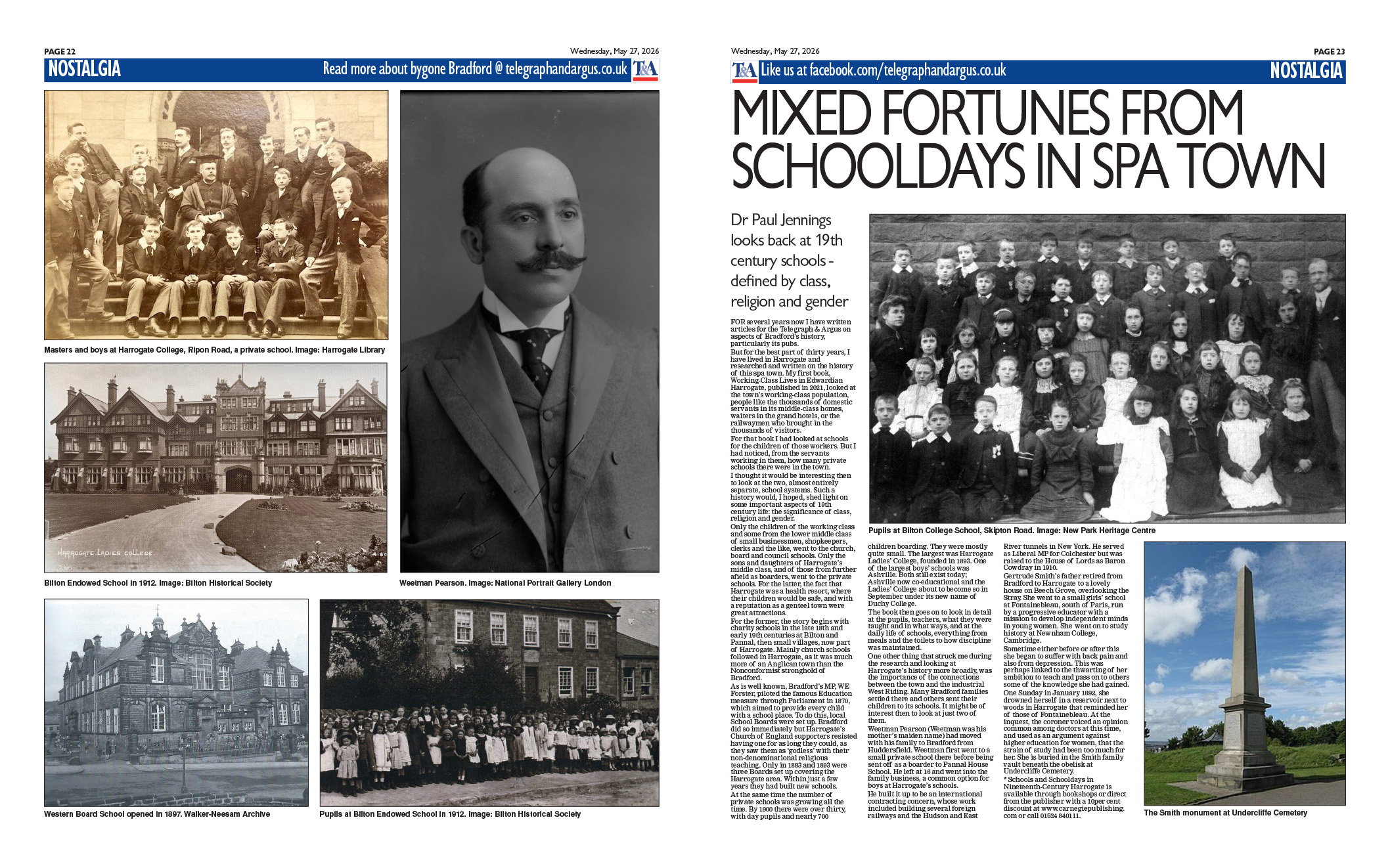
The story of education in Harrogate is a fascinating one. The nineteenth century was one of huge development and change in education, with the 1870 Forster Act aiming to create a school within reach of every child. As with so many aspects of life even now, class, religion and gender largely determined the type and quality of the provision of learning. Harrogate was no exception, and Paul Jennings examines all of these factors in this important new book. But in addition, Harrogate’s health resort status also led to the creation of an unusually high number of private schools, as fee-paying parents were assured that their children would benefit from the especially healthy surroundings.
For all types of school, the author covers topics such as the patterns of the school day, meals (or lack of them), segregation of the sexes, punishments and the changing curriculum. The result is a comprehensive and readable volume that will appeal to anyone with an interest in the history of both education and the town of Harrogate.
Author: Paul Jennings
Price: £20.00
Imprint: Palatine Books
ISBN: 9781910837542
Binding: Paperback
Extent: 284 pages
Format: 240mm x 170mm
Illustrations: 70
BISAC: HIS015000
Category: HISTORY
Audience: general
Publication date: 22 April 2026

Brian Barber –
This book is a study of the history of education in Harrogate, the author’s adopted hometown, up to the end of the Edwardian era. It examines both the public provision of elementary education for the town’s numerous working-class children up to their very early teens and also the day and boarding schools which catered for the more-prolonged schooling of the far fewer fee-paying middle-class children of the town’s business and professional classes. By the early twentieth century there were around 4,500 children educated in Harrogate within the state system. The numbers of those learning at private expense were less certain but considerably less numerous: by the same date, the town possessed around three dozen, almost all small, private schools of differing sizes in which boarders accounted for around 700 of their number. The explicit aim of the author is to draw the contrasts between the two school communities and to examine the subject through the three perspectives of class, religion and gender, although religion is, in fact, not noticeably taken into account except in the second chapter.
A short opening chapter briefly surveys the emergence of the town as a health resort whose early prosperity was based on the supposedly therapeutic if repulsive mineral springs that surfaced in the vicinity. Then, with the arrival of the railways, the town expanded further because of its attractions as a commuter town for the businessmen of Leeds and Bradford. It continuous expansion – two thousand in 1801 and more than 33,000 by 1911 – led it to be recognised as a new urban entity with the creation of a self-governing municipal borough council in 1884. (A complementary borough bench of magistrates was gained in the following year, although few of Harrogate’s tradesmen found themselves appointed to it, to their vocal complaint.) The author supplements this with an overview of the town’s middle and working class districts, based in part on his previously-published study of Working-Class Lives in Edwardian Harrogate. Here the book includes its only map, and that of only a small district of the town, which is regrettable.
Then follows the two longest chapters in the book, the first on schools for the working class-children, the second for those of the middle-class. The former retails a largely familiar institutional narrative of nineteenth century elementary education: first parish schools and the establishment of voluntary schools provided mostly by the Anglican ‘National Society’ and the non-denominational British and Foreign Schools. This is succeeded by an
account of the three decades of the district school boards and their publicly-funded schools from 1870, then superseded by the regime of the Local Education Authorities in 1902, as the majority of earlier schools for the poor progressively ceded their role to the expanding system of state education.
Here the author does acknowledge the significance of religion, in the persistent ideological undercurrent of antagonism between the ‘voluntarism’ of Nonconformity with its hostility to a state-sponsored religious denomination and the Anglican suspicion of the school boards, seen as encroaching Anglican hegemony through schools financed by the superior resources of local taxation. This difference of attitude was exacerbated – vociferously in some parts of the West Riding and for many years afterwards through its county council – by the Conservative government’s Education Act of 1902. Harrogate managed to avoid the deleterious effects of the prolonged guerrilla warfare between Church schools and the County Council because responsibility for education in the town was delegated to the borough by the county authority.
But the history of Harrogate’s ‘Higher Grade School’ and its ambiguous role in a state education system that was intended to provide for only an elementary level of schooling is outlined. For working-class children, education effectively stopped in childhood rather than adolescence. For them, attendance was compulsory only up to the age of ten from 1876, up to 11 from 1893, 12 from 1899 and 14 from 1918. Nor was it initially free of charge. A fee of a penny a week was customary until 1891 when any fee over this sum was abolished at all board schools, which also put pressure on other schools for the working-class to follow suit.
Chapter 3 examines the variety of educational opportunities provided by the seven-dozen predominantly small fee-charging schools to educate the appreciably smaller number of children of the middle class, in schools for girls, schools for boys, day schools, and boarding schools. For these pupils, education could continue well into their teens, and so could last up to twice as long as that offered to the working class.
Its cost was calculated in guineas rather than pence. Depending as they did on the financial resources and pedagogic competence of their owners, which determined the supply, and the successive cycles of prosperity and depression, which significantly influenced demand from fee-paying parents, the number of schools fluctuated over time, although the long-term total was upwards.
At the private schools the boys’ curriculum was intended to equip them for the commercial and professional pursuits which their parents expected them to follow. At schools for girls, the emphasis was on preparing the pupils for their likely roles in family and domestic life. From time to time, the author makes careful note of the fees necessary for the children to enjoy a longer, more varied, and socially-segregated schooling. A charge of up to £26 a quarter for boarders put such schools beyond all but the most affluent of Harrogate parents.
Chapters 4 to 8 are shorter and treat five aspects of schools and schooling. The first of these chapters, and the shortest, aims to review in some detail the social circumstances of a range of pupils at both elementary and private schools. This is, while ingeniously-compiled, naturally limited to the relatively restricted range of evidence available. There is more to be retailed, in chapter 5, about the teachers, mainly their social origins, training, gender and salaries, with many examples of the experiences of particular staff members in state and in private schools.
‘Teaching and Learning’, the subject of chapter 6, examines the inculcation of standards of behaviour in state schools and, in both sectors, the changing content of the curriculum for both boys and girls. In the former, content was determined, in essence, by conditions governing eligibility for grants from central government (the system of ‘payment by results’, introduced in 1862), with its emphasis on basic literacy and numeracy. In the latter, the focus was decided by the need for private schools to teach their pupils to pass examinations for professional, university, and civil service entrance. Curriculum was also crucially influenced by the level of facilities, particularly in the teaching of science subjects. Gradually, in the education of girls, the emphasis on their role in their home was adjusted to provide academic opportunities for those with different prospects. Facilities especially valued by private school as the century progressed were sports fields for cricket, football, and hockey.
Matters of punctuality, regular attendance, school meals, illness, medical inspection, special needs, discipline and punishment are the principal themes of ‘school life’ in chapter 7. Following this, ‘After School’ treats the world of work for state-school children, and their slight prospect of secondary and adult education, university extension lectures, and other avenues for intellectual curiosity and as means of advancing their careers. To examine the adult lives of those who attended private schools, the author uses the information he gathered, (initially for investigation of their social origins in chapter 4) on 120 boys and 67 girls. The boys entered business and the professions, and the girls mostly became home-makers, although others pioneered the widening of employment opportunities that became increasingly common in later decades.
Schools and Schooldays in Nineteenth-Century Harrogate is a remarkably thorough and thoughtful enquiry in which the author skilfully deploys a remarkably wide range of diverse archival materials, books, and articles. At times, however, the sometimes excessive degree of detail mutes the impact of the exposition. Nevertheless, the book forms an admirable template for other local historians to follow if they possess the skill, diligence and enthusiasm on display here.
Tim Lomas –
In this excellent book, Paul Jennings identifies three important features that explain educational provision and practice: class, religion and gender. The first of these he sees as particularly important and many of the chapters in the book have separate sections on the lower social orders and the middle classes. He recognises that the division is a little arbitrary and that each social group embraced a range of society but his basic premise is that both followed separate paths as far as education was concerned. It is argued convincingly. Jennings has researched this theme thoroughly, covering not just the Harrogate context but also the wider education scene. The book is well referenced with detailed notes at the end of each chapter and an extensive bibliography revealing use of a wide range of primary and secondary sources. While the title refers to the nineteenth century, he sensibly takes the story up to the First World War, taking in the significant 1902 Act and some of the legislation of the 1906 Liberal government. It also makes sense because the sources become more extensive, especially after the extension of the state into education particularly following the 1870 Education Act.
He is also at pains to remind readers that Harrogate may have had a reputation as an upmarket health resort—he identifies some 170 different private in the period 1800‒1914—but there was also considerable deprivation. This is amply demonstrated in the coverage of the elementary board and voluntary schools. A successful job has been done tracing these schools, which was no easy task as there was a degree of impermanence to many, especially the private schools, some which were in existence for just a few month.
The book begins with a brief history of Harrogate, which is obviously useful to those not familiar with the town. It then looks at schools for the working classes, schools for the middle classes, pupils, teachers, teaching and learning, opportunities for young people after they left school, and a conclusion that summarises the situation in the period after 1914 and reminds us how dramatic change had been. What seem to be the key takeaways? Firstly, schooling might have been patchy but it was certainly not absent in the early nineteenth century. Even before 1830 there was quite a high demand from parents for some kind of basic literacy for working-class children. The 1830s was an active decade for establishing schools in the Harrogate area. They were often provided by charities, especially from local landowners. After the 1830s there was a slump in new schools until the 1870s.
Secondly, as Jennings reminds us, school provision was not the same as take-up or quality. He notes that achievement in elementary schools was relatively low, although improving by the later century, perhaps aided by grants being awarded for success in a range of subjects. Nevertheless, before this time it would be wrong to assume that all such education for the working classes was of poor quality. Thirdly, it is important not to see the school board and voluntary systems as two parallel universes. School boards were often regarded as a mixed blessing and were strongly resisted in many areas, especially by Anglicans. However, a large number of Church of England schools transferred to the local board because they lacked the resources to offer the same provision. Boards themselves were a varied group, some ridiculously small and others which were less democratic than intended.
Fourthly, education for girls was not ignored. It was estimated that 100 of the 170 private schools in Harrogate during this period were for girls. On the whole though attitudes towards the education of girls shifted only slightly, with the purpose being to prepare them for their lot in life as wives, but supplemented by a belief that an education helped them become better wives, brought them self-fulfilment and acted as an avenue for ‘surplus girls’. In so far as there was any fixed curriculum during the nineteenth century, girls were often expected to study more domestic subjects, such as needlework.
Given the vast range of schools, it might be expected that teachers in Harrogate schools were equally varied and this seems to be the case. In elementary schools by 1850 it was common to find married couples at the school, sometimes supported by family members. As so often, female teachers exceeded the number of men, although not in terms of seniority or pay. In elementary schools they were often from the working or lower middle classes, usually local, so Jennings presents a picture of Yorkshire-born children taught by Yorkshire-born teachers with the same accents. Those in private schools tended to be much better qualified, often from further away. In later years teaching was regarded as a job for life. There was less security in nineteenth century Harrogate: the existence of a private school was often short and uncertain, female teachers did not stay on after marriage and dismissals were relatively common.
The sixth takeaway supports the findings of work done elsewhere. The emphasis on morality, preparing for one’s role in life, and loyalty come through strongly. So does the importance of national identity, patriotism and empire in the later period. Good behaviour was reinforced with pupils frequently exhorted not to be a nuisance, not to break the rules, not to loiter, nor to fall for the demon drink. At the same time kindness was promoted, especially to the less fortunate. The traditional image of frequent beatings and caning does appear in the Harrogate sources, especially for boys, but it does not seem excessive and a fair amount of compassion and understanding was also evident.
The overall scene would hardly be recognised in the twenty-first century school. This is not surprising when, for much of the nineteenth century, there was no agreed curriculum or even consensus on when children should be at school. Other aspects would also appear as another world: health, sanitation, resources, special educational needs, pastoral care and education beyond school have all improved beyond something Paul Jenning’s nineteenth century schoolchildren and teachers could have imagined. We might have our challenges but at least working-class boys and girls do not have to leave school and become errand boys or go into domestic work at home and private school girls do not have to head into marriage—something that happened more often than not in Harrogate.
TIM LOMAS is a trustee of the BALH and a former chair. Previously he was a teacher and inspector with an interest in education history